Showing posts with label Black lace spider. Show all posts
Tuesday, 1 April 2014
Black Lace-Weaver wanderer
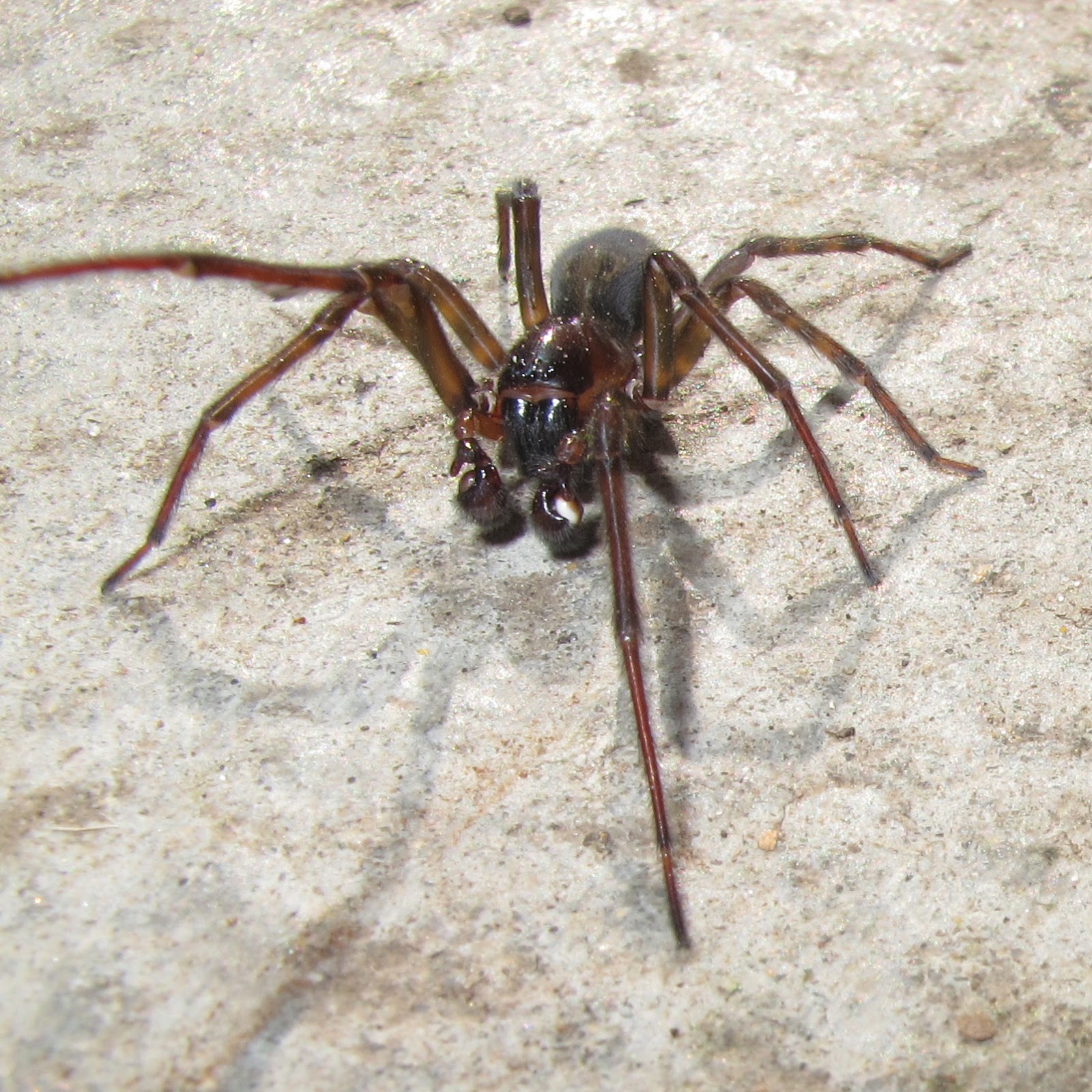
In springtime male Black Lace weaver spiders roam in search of females. This one was dangerously walking on the pavement this morning, cold and wet from the night's rain. I took some quick shots and took him home for a white background session. The male palps look like they are holding white balls, these are the characteristically white and very visible palpar organs in this species.
Black-lace weaver females (Amaurobius ferox), as their smaller relatives Amaurobius similis, have remarkable maternal behaviours, including guarding the spiderlings, feeding them using unfertilised eggs and then finally, encouraging them to eat their own bodies (matriphagy). For a fantastic video documenting this spider's maternal behaviour see this Arkive entry.
More info in the British Arachnological Society page.
Friday, 26 April 2013
Black Lace Weaver
If I had a spider top list, Amaurobius ferox, would be definitely in the top ten. So, meeting it for the first time, a male crossing my path on my way to work following its ghostly shadow cast by the morning sun, made my day. This is a large, powerful looking spider, much darker than its more common relative Amaurobius similis, which I often encounter inside the house. The large, complex structures, looking a bit like boxing gloves, are the palps, used by males to inseminate females. Female spiders have thin, simple, palps that look like small legs. Note the rounded structure visible on its left palp on the top photo, this is the palpal organ, which is characteristically white in this species.
I took some photos and directed the spider to the wooded area at the side of the path, before it was squished (inadvertently or not), by students walking to their lectures. These spiders are typically nocturnal in their activities, but males are now wandering in search of mature females
The Black Lace Spider, according to W.S. Bristowe:
"has an almost black abdomen bearing what vaguely reminds me of a skull and crossbones marking. This gives her a sinister appearance and she certainly is a formidable monster in its own territory. Indeed, the webs [of this] are singularly adhesive when fresh and the spider venom takes effect on an insect quite quickly"
Labels:
Amaurobius ferox,
Black lace spider,
spider
Subscribe to:
Posts (Atom)