

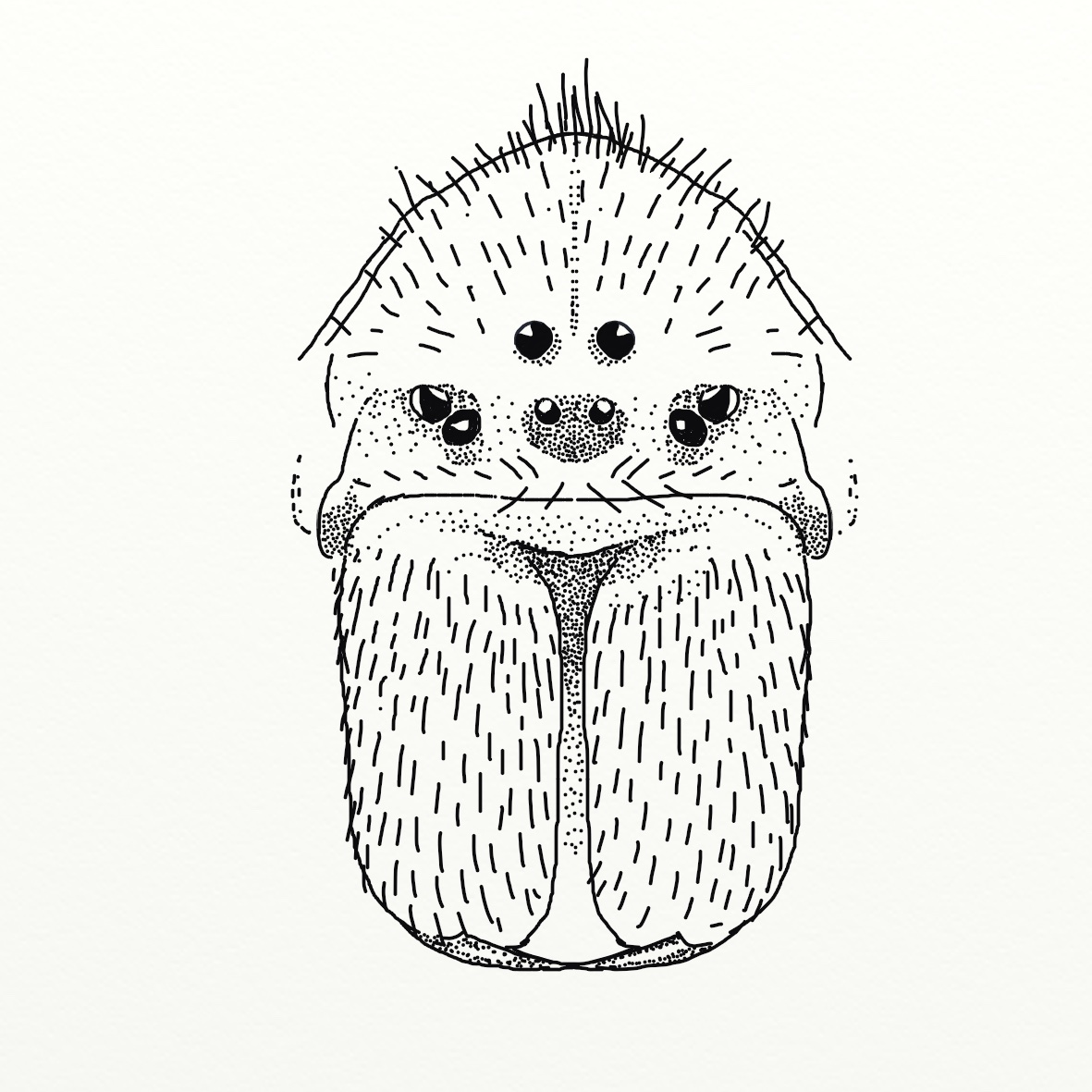
This family has almost 700 world species of which three are found in the UK, all from the genus Amaurobius. They are large, robust spiders who produce cribellate, 'fuzzy' silk. They are nocturnal and live most of their lives hidden in silk-lined funnels in crevices in walls, tree trunks, ivy covered walls, or under logs and stones. Funnels are easily spotted as their entrance is surrounded by a messy array of lace-like silk threads extending onto the surrounding area. The silk is bluish when freshly laid and it immediately identifies its owner before you have even seen the spider. Passing insects get tangled on the threads and the resulting vibrations alert the spider sitting in her retreat. She springs out of her retreat, localises the insect and quickly bites a leg. Once she gets a good hold, she pulls the insect into her retreat.
Carding silk
Amaurobius similis often lives inside houses, and if you know where one of her retreats is, you could witness how she combs silk with the structures on her rear legs around the entrance to the retreat. Taking time to spin a few snares around the entrance each night.

An Amaurobius similis on the entrance of her funnel on the corner of a wooden fence.

Amaurobius female carding silk.
Eggs and egg sac guarding
Males mature in the autumn, when they wander in search of mature females (the top shot shows a male Amaurobius ferox, which tends to mature at the end of winter). When they find a female's web, they drum on to the threads with their abdomen and palps to signal his approach. Mating is a very swift affair. Females lay their eggs in a silk cell on her retreat and sits by them.

Amaurobius sp. guarding her egg sac
Matriphagy
The female's care does not end with the guarding of the eggs in Amaurobius. When the spiderlings hatch, she opens the egg sac to facilitate their emergence. They she will sit by them and eventually produce a second batch of immature eggs, which the spiderlings will devour. This first meal substantially increases spiderling survival rates. She does not end her care them, as just before she dies, she collects the spiderlings under her body encouraging them to climb over her and feed on her body. Watch this video documenting this fascinating spider's maternal behaviour:


Amaurobius ferox male showing his remarkable palps, which appear to be holding white marbles.

A female Amaurobius female on her blue silk threads.


